
Milan Canine Fertility

◈ Dog fertility clinic · Herne Bay, KentGood timingchanges everything.

A one-woman dog fertility clinic on the Kent coast — from the first smear of a season right through to a warm box of puppies.

Small clinic. No queue. You'll always speak to me.

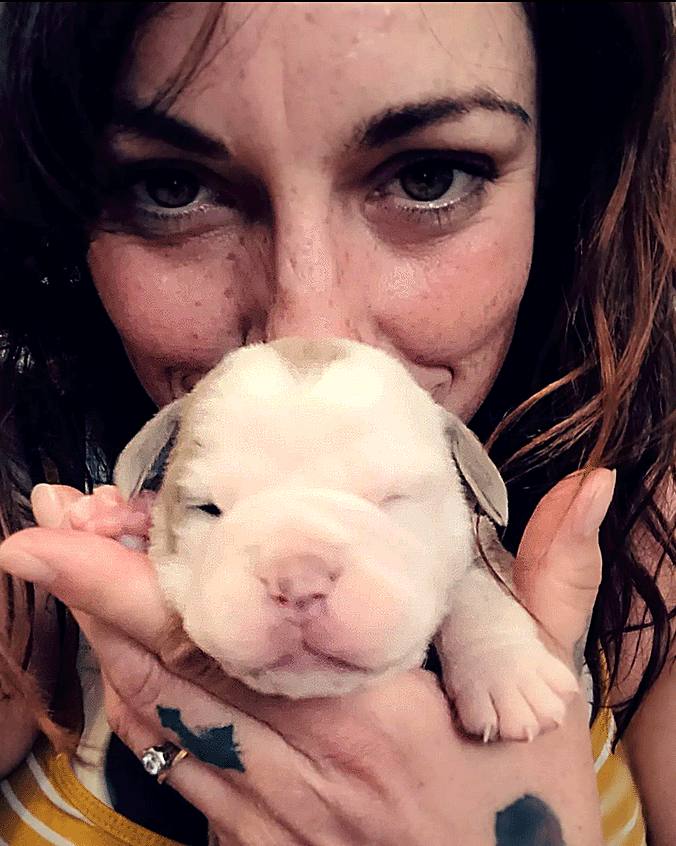
Hayley holding a newborn bulldogge puppy
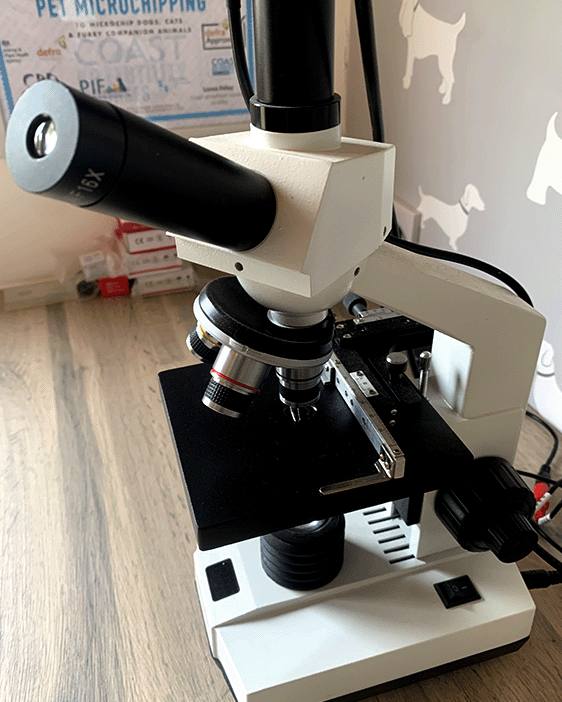
The microscope in the Milan clinic room
The one-woman band

Hi, I'm Hayley

I've been breeding Olde English Bulldogges and French Bulldogs since 2020, and everything I know about dog fertility I learned the hard way first — on my own girls, at 3am, with the kettle on.

Milan Canine Fertility grew out of that. It's just me: I do your slides, I do your scans, I answer the phone, and I'm the one who picks up when you're worried at midnight. No rotating staff, no call centre, no being passed around.

What I care about most is honest timing and honest answers. If the window's gone, I'll tell you. If something on a scan doesn't look right, I'll tell you that too, and I'll tell you to ring your vet.

  • Certificated in cytology & ovulation testing, canine A.I. & semen analysis, and canine pregnancy ultrasound
  • Defra-approved pet microchipping certification
  • Level 3 Award in Canine Nutrition, achieved with distinction
  • Fully insured, purpose-built clinic room in Herne Bay
  • Home of Milan Bulldogs — NEBBR champion Olde English Bulldogge and French Bulldog lines
  • Out-of-hours whelping support for booked clients
Where it happens

A calm clinic room, and a garden to stretch their legs

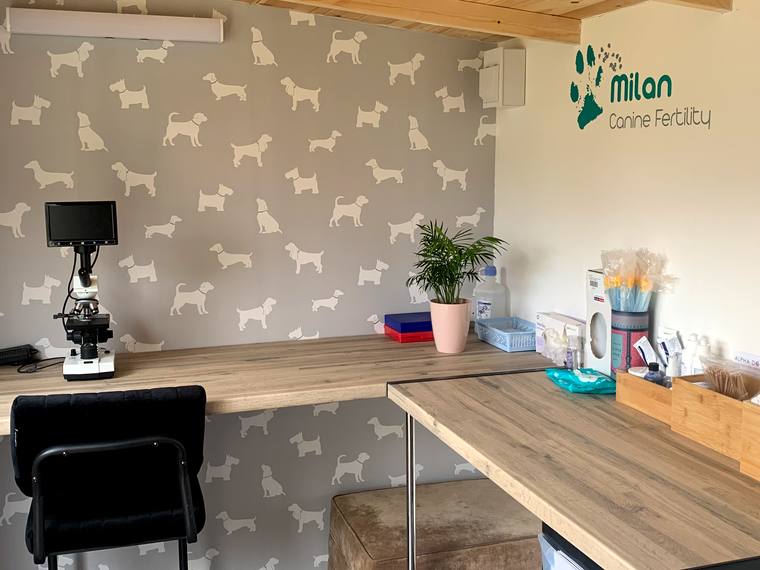
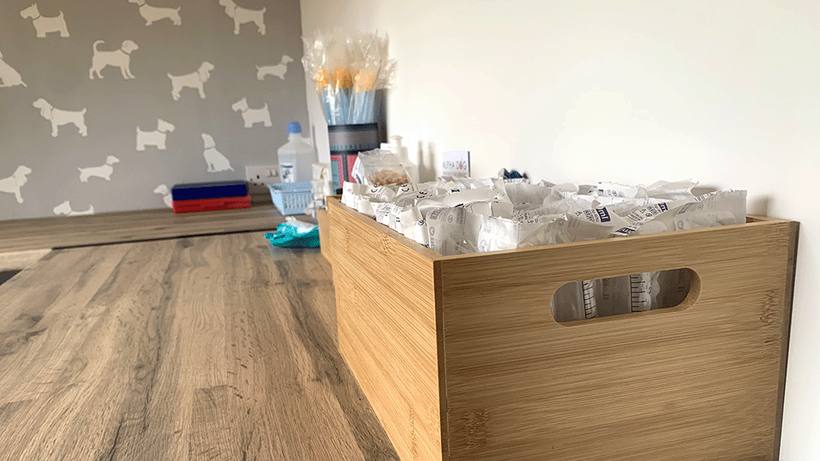
Purpose-built, warm and quiet, with everything to hand — microscope, ultrasound and all the kit clean and ready. Outside there's a safe, enclosed garden, so your girl can have a wander and a sniff before we start, and a stretch afterwards.

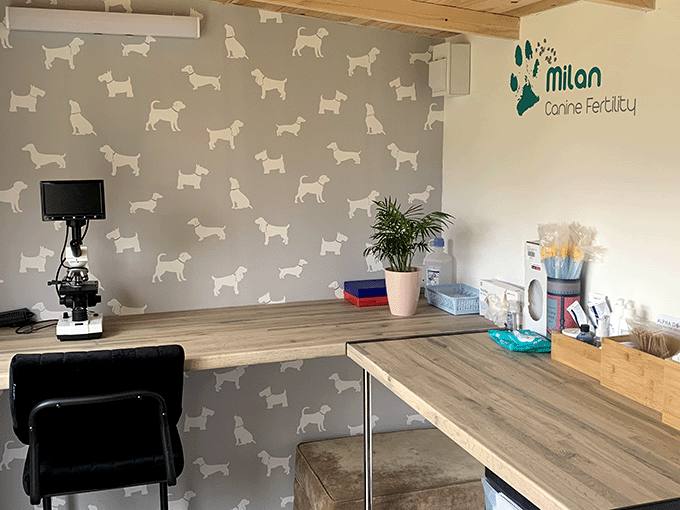
The dog fertility clinic room at Milan in Herne Bay, Kent
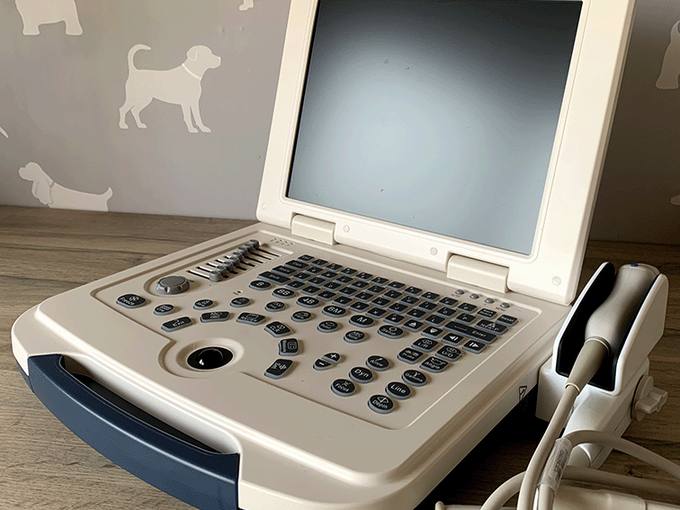
Clinic desk with microscope and ultrasound
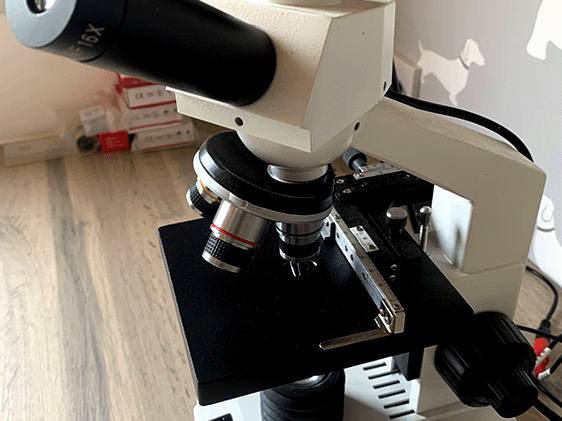
The clinic microscope
Ultrasound machine
Dog fertility services, in the order you'll need them

One season, start to finish

Everything I offer follows the same arc — her season, her scan, her whelping box. Every breed welcome, from bulldogs to whippets. Find where you are and start there.

Cornified cells on the microscope screen during a dog cytology reading
Days 3–12 of her season

Cytology & ovulation timing

A quick, gentle swab that tells us where she is in her season and how close her oestrogen peak is. Done properly and repeated, it is all the timing most girls ever need.

What it actually shows

As oestrogen climbs through pro-oestrus, the cells lining the vaginal wall change shape. They start round and plump and end up flat with sharp, angular edges — cornified. Under the microscope that shift is unmistakable.

  • Repeated every 2–4 days, cytology tracks that climb. Once she's around 70% cornified and holding, we're into the window — and reading the slides in sequence is what makes it accurate.
  • It confirms she's genuinely in season, and not showing something else that mimics it.
  • At the other end it shows the dioestrous shift — the moment the window shuts. Breeding after that shift very rarely works, and knowing is far kinder than hoping.
  • It's quick, it's kind, and it's far less invasive than sticking a needle in her every other day.

I don't push blood testing. Read the slides properly and cytology gets you there — my success rates say so.
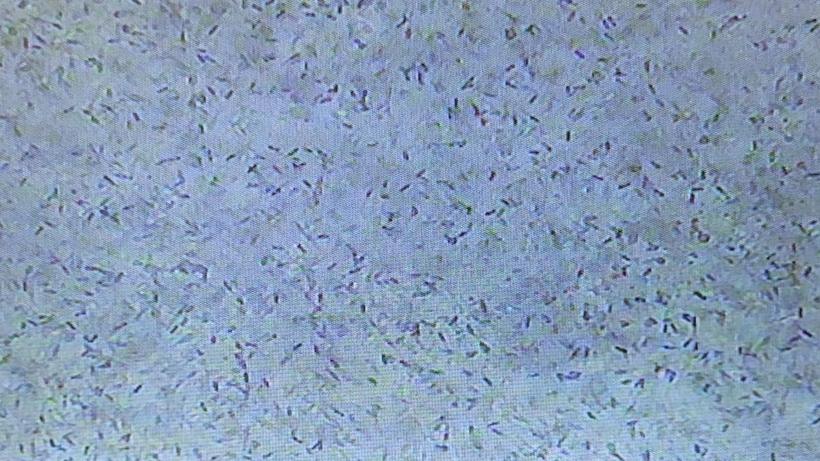
A dog semen sample under the microscope during a sperm count
The stud's side — any time

Semen collection, analysis & shipping

Collection and a full assessment before anything is committed to — plus chilled shipping if your stud is at the other end of the country.

What's assessed, and how it travels

A proper analysis covers volume, colour, concentration, total sperm count, progressive motility (how many are swimming forwards, not just wiggling) and morphology (what proportion are normally formed).

  • As a rough yardstick, expect near 10 million sperm per pound of bodyweight — so a 30kg dog in the region of 650 million. Breeds vary enormously.
  • For chilled shipping, the sperm-rich middle fraction is what we keep; the watery prostatic fraction is discarded because it shortens the sample's life.
  • An extender is added, the sample cooled slowly — never dropped straight into a cold fridge — and packed with a gel pack for overnight courier.
  • A good chilled candidate starts at 75%+ progressive motility and loses only around 10–15% over the first 24 hours.
  • The analysis sheet travels with the sample so the receiving end can compare on arrival.

If a stud has never been analysed, do it before you time a bitch around him. It's the most common cause of a "mystery" missed litter.

The clinic room prepared for a procedure
Days 11–16, give or take

Artificial insemination

Timed off what her slides are telling us — not off a wall calendar, and not off whether she's standing for him.

Why the timing is so particular

Bitches are unusual: they ovulate immature eggs that need a further 48–72 hours inside the oviduct before they can be fertilised. So ovulation day is not breeding day.

  • What matters is the trend across her slides, not any single reading in isolation. That's why I want to see her more than once.
  • The semen type dictates how tight the window needs to be — fresh is forgiving, chilled less so, frozen least of all.
  • Behaviour is a poor guide on its own. Plenty of girls flag days early or days late.

Please note: in the UK, artificial insemination in dogs is classed as an act of veterinary surgery, and surgical insemination has been banned since 2019. I work alongside your vet on timing, monitoring and preparation so everything happens on the right day.

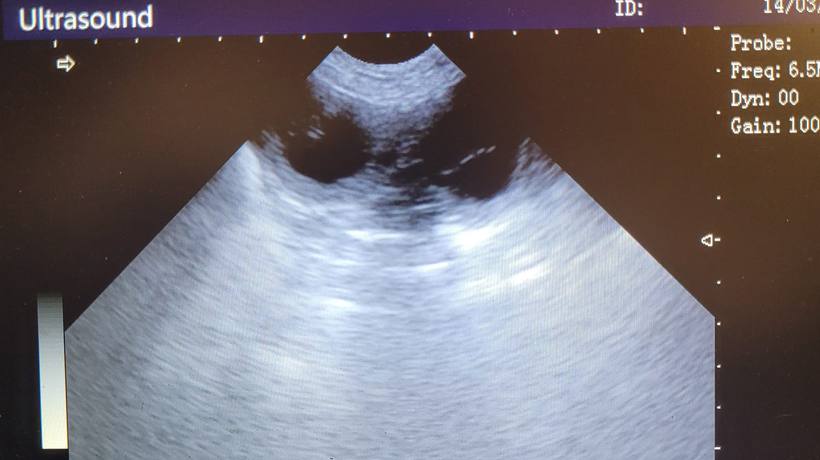
Dog pregnancy ultrasound scan at 28 days
Days 21–30, then again around 45

Pregnancy scans for dogs

The nicest appointment of the lot. Sacs from around 21 days, heartbeats from roughly 24–26, and a proper look at how she's doing.

What a scan can and can't tell you
  • From day 21 small dark sacs become visible. Scanned earlier you risk a false negative and a miserable drive home.
  • Days 24–26 is usually when we find heartbeats — the first real confirmation that the pregnancy is viable rather than just present.
  • Days 28–30 is the most reliable single window, allowing for the fact nobody's ovulation date is ever perfectly known.
  • A scan also picks up problems that have nothing to do with pregnancy — uterine infection such as pyometra being the important one. Early scanning has saved girls' lives.
  • A second scan around 40–50 days checks growth, fluid and heart rates.
  • And yes, I'll give you a number. Counting pups on a scan is a skill rather than a guess, and after dozens of litters mine come in right, or near as makes no difference. Breeders travel to me for it.
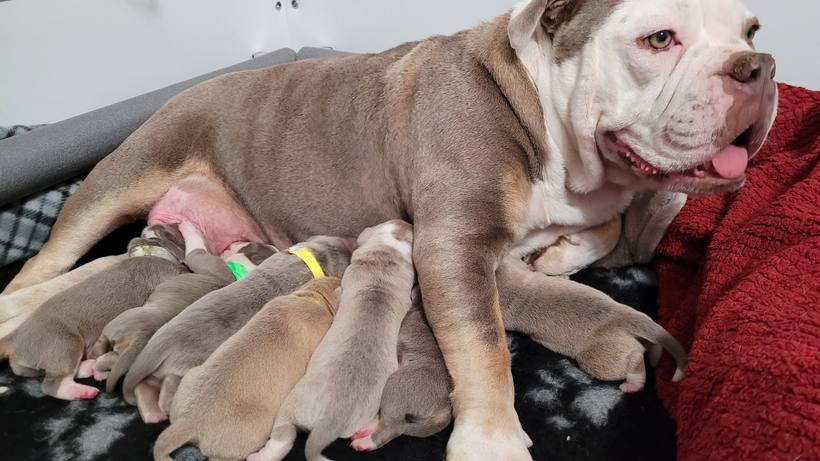
A bulldogge dam with her newborn litter
Around day 63 from ovulation

Whelping support

Someone calm in the room at 4am, or on the end of the phone all night. Whichever you need.

What support looks like
  • Counting from ovulation, not mating. Gestation is far more predictable from the ovulation date — which is exactly why the timing work at the start pays off at the end.
  • Kit list, whelping box setup and a run-through of the stages of labour, well before she's due.
  • Temperature monitoring in the final week, and what the drop actually means.
  • On the night: attendance or phone support, cord care, drying, first latch, and weighing every pup so we spot a fader early.
  • Clear red lines for when to stop and ring your vet — hard straining with nothing produced, an over-long gap between pups, or a dam genuinely in trouble. I'd always rather you rang them too early than too late.

Bully breeds especially — have your vet's out-of-hours number on the fridge before you need it.

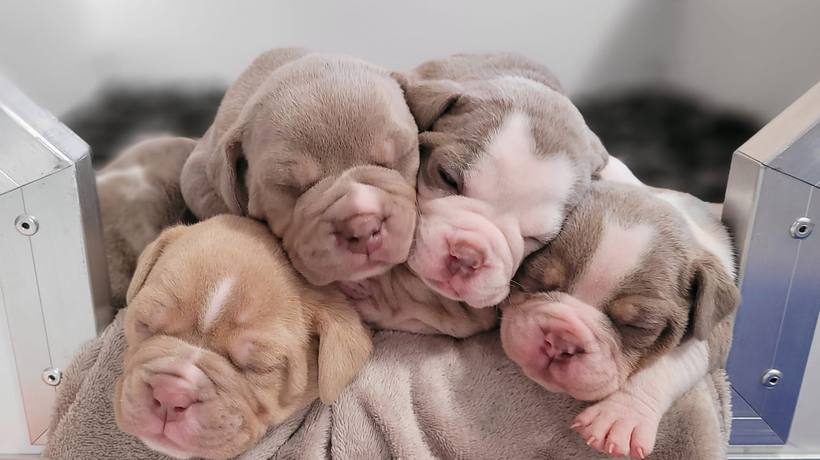
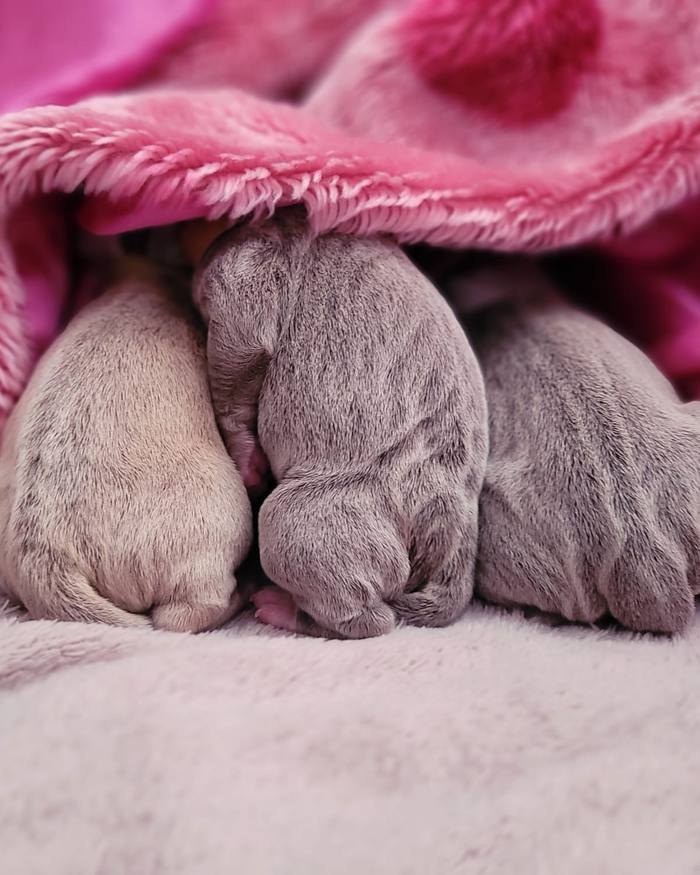
A litter of bulldogge puppies
Before 8 weeks old

Puppy microchipping

Done at home with the litter, in one calm session, with the paperwork sorted properly.

What the law asks of breeders

In England, Scotland and Wales every puppy must be microchipped and registered on a compliant database by eight weeks old, and it's illegal to hand a puppy over to a new keeper unchipped.

  • The breeder must be recorded as the first keeper. The new owner then updates the record when the puppy goes home.
  • Failing to comply can mean a notice giving 21 days to put it right, and a fine of up to £500.
  • The chip doesn't replace a collar and tag — still a separate legal requirement in public.
  • Keep your own details current on the database, and hand the registration paperwork over on collection day.

I hold the Defra-approved microchipping certification, so litters can be done here or at yours.

Paperwork, on the wall

Qualified, certified, insured

Every course, framed and up in the clinic. Tap any of them to read it properly.

Still training, still adding to the wall — there’s always more to learn in this job.

Milan Bulldogs — stud dogs

Our boys

Olde English Bulldogges and French Bulldogs, health tested and honestly presented. Every certificate is available to see before you commit — ask and I'll send them over. We offer lifetime support to every puppy sired by our males.

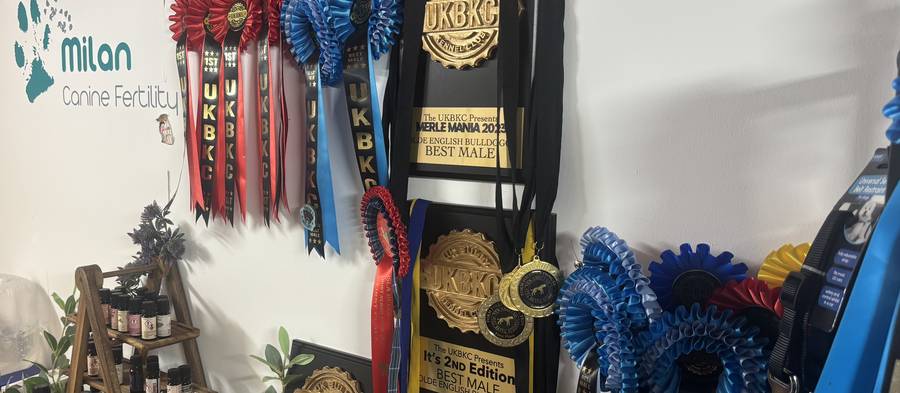
Rosettes and medals on the clinic wall at Milan
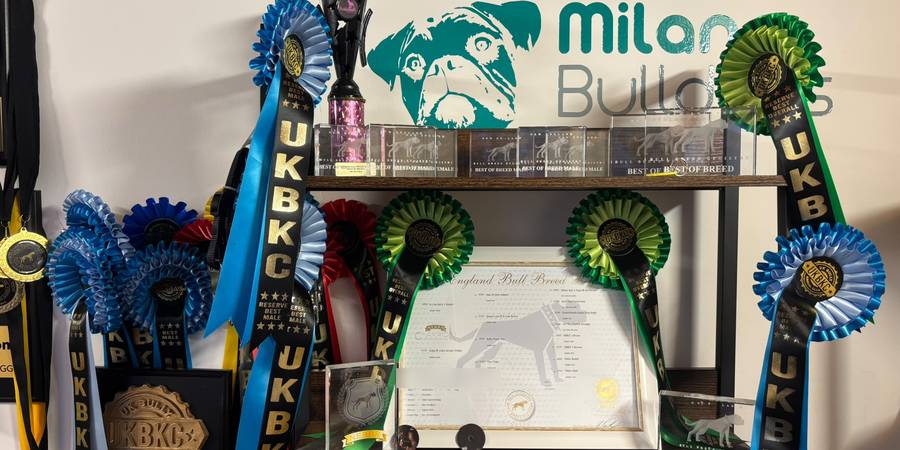
Dre's championship certificate, trophies and rosettes at Milan Bulldogs
Milan Bulldogs — our lines

Two breeds, both kept properly

Everything we know, we learned on our own dogs first. That is the whole reason the clinic exists.

Olde English Bulldogges

Where we started, back in 2020. The line runs through Ch. Dre — an NEBBR Champion, hip and elbow scored, BVA eye tested and BOAS graded — and Kansas, whose DNA panel came back completely clear and whose hips and elbows are scored under the BVA and Kennel Club schemes.

Both boys are at stud, both live in the house, and every puppy they sire gets lifetime support.

French Bulldogs

Our Frenchie side is every bit as established. Miley has raised three litters for us, and her daughter RiRi has now had a litter of her own — so we are into a second generation of a line we know inside out and intend to keep working with.

On the boys' side, Moose stands at stud, carrying French Bulldog Club of England Health Scheme Silver and a BOAS functional grade of 0. A second Frenchie stud joins him shortly.

Two breeds, both brachycephalic, both worth doing properly. It is why the airway grading and the hip scores matter to us.

Before you ring

The questions I get most

When should I book her in?

Ring me on day one — the first day you see colour. Booking early costs you nothing and means we can start cytology at the right point rather than playing catch-up. Most misses are timing, not fertility.

Do you only work with bully breeds?

Not at all. Olde English Bulldogges and French Bulldogs are what I live with, so the bully breeds are what I know inside out — but every breed is welcome and the process is the same. Spaniels, labradors, collies, terriers, whatever you have.

Can you tell me how many puppies she's having?

I can give you a rough idea from a scan, but I won't pretend it's precise — scans undercount, particularly with large litters. If you need an accurate number for planning a section, ask your vet for an x-ray after day 47.

Do you work with my vet?

Always. I'm not a substitute for veterinary care and I'll never pretend to be — if something needs a vet, I'll tell you straight away. The best outcomes come from both of us being in the loop.

What does it cost?

Message me and I'll send the current list — no hidden extras, and package pricing if you're doing timing right through to whelping.

Where are you, and do you travel?

The clinic is in Herne Bay, on the north Kent coast, and everything happens here — a quiet room and a safe garden, which is a far calmer place for the girls than a car park. We're a short run from Whitstable, Canterbury, Faversham and Thanet, and plenty of people travel a good deal further. Give me a ring if you're coming from outside Kent and we'll sort a time that works.

Say hello

Ring me on day one

Call, message, or WhatsApp — I'm usually elbow-deep in something, but I always come back to you.

Herne Bay, Kent — appointments only, so we're never rushed.

A newborn bulldogge puppy
✆ Call Hayley ◍ WhatsApp